
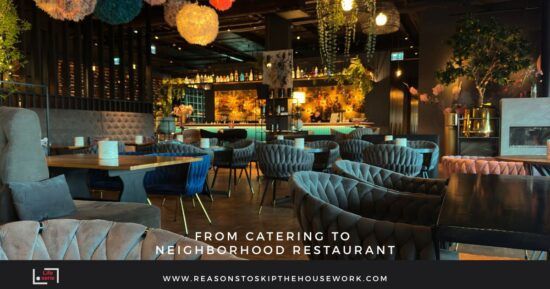
Years back a good friend of mine chose to stop lugging chafing dishes into corporate buildings at 6 a.m. Following years managing a bustling catering business, in New Jersey she sought something more anchored in the community. Therefore she rented a corner location adorned the walls with a green hue and launched a modest café and eatery.
Logically it was completely reasonable. She was familiar with food pricing, vendors and managing groups. How challenging could running a 60-seat café be, after catering for 200 people for years?
It’s actually quite challenging—. A major factor in the issue was lacking the appropriate venue management software to ensure the front-of-house operated efficiently.
In the catering business nearly everything is foreseeable. You are aware of the number of guests. You have knowledge of when attendees will show up. You receive the menu ahead of time. The “rush” is intense. It is organized and controlled.
Her café was quite the reverse. On days the spot was bustling with a line stretching outside the entrance. On other occasions the dining area seemed oddly vacant during periods that should have been busy. Some tables remained partially occupied. The small host stand was cluttered with notes. There was constantly someone asking, “Hold on have we already seated that party of two?”
The food was great. The vibes were great. The operations were not.
Contents
- The initial “this could be our last” Saturday
- Why catering expertise doesn’t directly apply to a dining room setting
- Locating software that genuinely communicates with the shop floor
- Setting up the café like a system, not just a room
- Running at full capacity without burning everyone out
- The Sunday brunch test
- Seeing the business as a whole, not just a single room
- What this implies if you are launching a restaurant following catering
- From “organized chaos” to “busy but calm”
The initial “this could be our last” Saturday
The tipping moment occurred on a Saturday morning. A large party entered without a booking followed by another then a steady flow of couples, parents pushing strollers and remote workers with laptops.
The host attempted to manage a waitlist in a notebook, answer phone calls questioning “Do you accept reservations?”, deal with a couple insisting they had called in advance and respond to a server requesting if a two-top could be fit into a corner. It seemed like five systems layered within a cramped area.
Meanwhile some seats remained vacant, in odd spots. A table for four was left empty since they hesitated to seat a couple “just in case.” A table for two was wedged between two parties and no one chose to occupy it. One table had technically finished dining, but the server hadn’t delivered the bill yet.
People spent 25–30 minutes waiting as fine seats took ages to become available. That night she went home and said, “I know how to prepare food for 300 people yet I can’t figure out how to seat 60.”
That was the moment she confessed the reality: her issue wasn’t with cooking. It was an issue of capacity.
Why catering expertise doesn’t directly apply to a dining room setting
When managing catering you’re accustomed to organization. You create schedules, run sheets and to-do lists. You work within spreadsheets, email threads and billing documents. It’s a lot to handle, largely within your grasp.
A restaurant or café reverses that dynamic. You no longer have control over timing as guests arrive early, late or simultaneously. You don’t always manage table configurations since a four-seater might become three friends and a stroller. You also don’t dictate the reservation method. Some reserve via the internet, others drop in unannounced, some send messages on Instagram. A few text their cousin who “knows the owner.”
Within the kitchen an additional level of expertise gains significance when you’re catering to guests continuously throughout the day rather than only during scheduled occasions. This website provides an explanation about the crucial role of knife skills in a restaurant kitchen, serving as a useful reminder that precise technique is not merely a “nice to have.” It’s what enables your team to work efficiently, maintain safety and manage preparations effectively as orders begin to pile up.
My friend attempted to manage everything using a paper floor plan, a notebook and a simple booking form on her website. It was effective during slow days. On busy days it collapsed.
She wasn’t only losing her sanity. She was losing revenue: seats sitting empty throughout the wait, customers walking out due to distrust in the wait duration, servers juggling three tables in one area while another remained half-empty. The space appeared active. The operation wasn’t functioning at maximum efficiency.
Her spreadsheets for food expenses and catering lists couldn’t solve that problem. She required a tool designed for the live aspect of managing a venue.
Locating software that genuinely communicates with the shop floor
She began searching for solutions that offered more than handling online bookings and dispatching confirmation messages. She desired a tool that could display a floor plan, monitor both walk-ins and reservations collectively, provide accurate wait times rather than arbitrary estimates and assist her team in identifying which tables would be available shortly.
This is how she came to experiment with a venue management software designed for restaurants and cafés. The concept was straightforward: rather than handling paper notes, multiple apps and relying on memory, everything is consolidated into a single live dashboard that reflects the real layout of the floor.
For the first time she was able to observe all at once which tables were occupied, which were settling their bills, which were nearing turnover and which guests were waiting along with their party size and arrival time. Future bookings were organized sequentially, allowing the host to prepare in advance rather than respond in a frenzy.
It wasn’t sorcery. It was simply the occasion when her front-of-house resources aligned with the actual state of her dining area.
Setting up the café like a system, not just a room
The installation procedure resembled launching a new catering spreadsheet yet with a graphical variation.
She created a layout of her floor plan incorporating the patio and several bar stools. She inputted the opening hours, reservation policies and maximum occupancy. She established limits on the number of bookings allowed per time interval to prevent the kitchen from being overwhelmed.
Since her reservation platform and venue administration were integrated, bookings, Google reservations and the widget on her website all channeled into a single interface rather than being dispersed across emails and various tabs. When a person reserved a table online for 10:30, that table was marked as occupied on the layout before the venue opened.
When a walk-in guest showed up the host was able to look at the screen and quickly identify which tables suited that party’s size and schedule, avoiding guesswork and uncertainty. The system also aided in avoiding double bookings and uncomfortable overlaps. If a table wasn’t expected to be ready on time, it alerted the host to the issue before any commitments were made that couldn’t be fulfilled.
She was naturally someone who valued employing the right tools in the kitchen. Pieces such as methods to streamline home cooking using suitable tools essentially reflected her character. This approach extended to the front-of-house as well: secure the correct instrument and allow it to unobtrusively simplify the process.
The weekend following the switch her host remarked, “It feels as if someone has just switched the lights on.”
Running at full capacity without burning everyone out
The main objective wasn’t to “increase the number of reservations.” It was to “fill every seat without overworking the staff or upsetting the guests.”
The tools for managing the venue assisted in particular aspects.
Initially the team at last gained an understanding of actual capacity. Rather than gazing at a packed room and making guesses, they could identify which seats were occupied, which ones would soon become available and where revenue was being lost. Trends began to emerge: specific time periods consistently underbooked, a patio area that remained vacant and sections that had faster turnover than others.
Secondly the wait times provided were truthful and precise. When the host informed a group “It’ll be 15 minutes,” that prediction was based on real data: the reservations expected to show up, the typical duration of similar table stays and how many bills were currently being processed. Visitors observed the change. They began to rely on the estimate instead of dismissing it and leaving the area.
Thirdly servers no longer faced surges at arbitrary times. Having a view of the space, the host was able to distribute tables more evenly rather than assigning three new parties to the same server within five minutes. Sections appeared busy yet controllable. The atmosphere shifted. It resembled a team effort more than a constant battle for survival.
The result wasn’t just more covers. It was calmer, steadier service. Busy, but not frantic. Full, but not chaotic.
The Sunday brunch test
The real test for any neighborhood café is Sunday brunch.
Prior to implementing software, brunch at her place resembled a scene. Bookings were jotted down in a notebook. People arriving without reservations created a crowd by the entrance. Patrons with laptops occupied two-top tables long after their meal. The team worked hard, but it seemed like managing traffic without traffic signals.
Once she established venue management the appearance of brunch changed significantly.
Bookings were entered into the system in advance, allowing the host to visualize the morning’s layout before the initial pot of coffee was brewed. She imposed a limit on the number of reservations accepted per time slot, preventing the kitchen from becoming overwhelmed and the dining area from experiencing delays.
Walk-in guests were placed on a waitlist displayed next to the reservations on the screen. Once a table became available the host quickly assigned the party to the correct table with a few taps. Wait times remained steady. Guests were seated in a sequence rather than simply whoever lingered closest to the host stand.
No additional chairs were introduced, yet it seemed as if they were. That month the café achieved record cover sales mainly because she optimized the use of the existing seating effectively.
Seeing the business as a whole, not just a single room
An unexpected development was when she began arranging additional private gatherings and considering opening a second venue.
Although she continues to have one physical location she now manages her café, a compact private event space and her catering orders as distinct “venues” within the same platform. This approach provides her with an overview of the number of covers generated from regular dining compared to events, which evenings rely significantly on reservations and the actual revenue produced by the side room she previously considered “extra.”
For an individual accustomed to working with spreadsheets for years, linking those figures directly to the events unfolding in the room every evening has been a significant change. Rather than speculating about where the hold-up occurs she can observe it on the display: sluggish turnovers at a specific table, lulls at particular times or a weekday that fills inconsistently.
What this implies if you are launching a restaurant following catering
If you operate a catering company now and are envisioning opening a café, wine bar or cozy restaurant here’s the straightforward truth.
Your cooking abilities will carry over.
Your effort will pay off.
Your old systems probably will not.
Catering provides a framework. It doesn’t completely equip you for the nonstop impromptu choices required in a bustling dining area. You must determine who sits where, when to mention a wait time, if it’s possible to fit one more table without overwhelming the kitchen and how to prevent walk-ins, online reservations and phone bookings from conflicting with each other.
Good food remains essential. Friendly staff, transparent menu prices and a cozy environment are still necessary. Software doesn’t substitute for hospitality. It simply eases the burden enough so your team can genuinely provide it.
From “organized chaos” to “busy but calm”
My friend insists that managing a café is more challenging than managing her corporate catering company. The working hours are extended. The customer traffic is more erratic. You don’t experience that clear break between functions as you do in catering.
She will also mention that she wouldn’t return.
Nowadays whenever I come by on a weekend the café is bustling. The host remains composed. Patrons are conversing on the sidewalk rather than staring nervously at the entrance. Tables are being refilled at a steady rate. The kitchen is active but not overwhelmed, and she’s not jolting awake at 3 a.m. anxious about possibly having double-booked a party of six.
A significant portion of that change resulted from recognizing she required systems, not merely improved recipes.
If you’re opening a restaurant or café, or if you already have one and your front-of-house still runs on sticky notes and guesswork, this is the moment to step back and rethink how your room actually works. Pair strong kitchen fundamentals with the right tools on the floor, and you give yourself a real shot at what every owner wants: a place that feels alive, stays full, and doesn’t eat you alive in the process.