
Water Before Itinerary
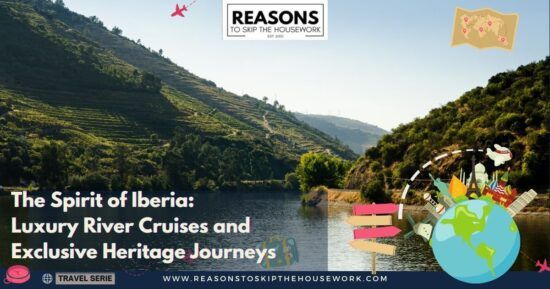
In Iberia, rivers do not rush toward spectacle. They widen slowly, carrying light in long horizontal strokes. Vineyards lean toward their edges. Stone towns sit above them without leaning too heavily on the view.
A river cruise here does not begin with departure. It begins with stillness — the boat resting against the quay, ropes slack, the air warm enough to blur the line between water and sky. Someone steps aboard without ceremony. Glass reflects pale afternoon.
The current is subtle. You feel it only when the shoreline begins to slide away.
There is no dramatic shift from land to river. The movement is gradual. Stone façades retreat in small increments. Olive trees appear along slopes that seem older than the buildings above them.
You realise that the journey will unfold laterally, not vertically.
Between Vineyards and Villages
Along the Douro, terraces climb hills in measured repetition, their lines almost too precise to feel natural. Somewhere between these slopes and the slow bend of the river, conversations drift toward plans — tastings, estates, perhaps even private trips to Portugal — though nothing feels hurried enough to become an agenda.
On deck, glasses remain steady despite the current. The landscape shifts gently rather than dramatically. A chapel appears on a hill, then dissolves behind vines. Sunlight flattens stone into soft tones.
Villages approach without noise. Mooring feels like continuation rather than interruption. You step onto cobbled streets that carry the same warmth as the deck you left behind.
Evenings lengthen without pressure. Dinner extends into conversation. The river holds its line beneath moonlight, not reflecting perfectly, just enough.
Across Borders, Without Edges
Further east, the tone shifts slightly. Spain widens into plains and cities that rise less abruptly than expected. Riverbanks gather trees in clusters that lean inward as if to contain the current.
At some point, itineraries expand to include inland routes — perhaps Spain tours that stretch beyond the river corridor — though even these movements feel measured, not urgent.
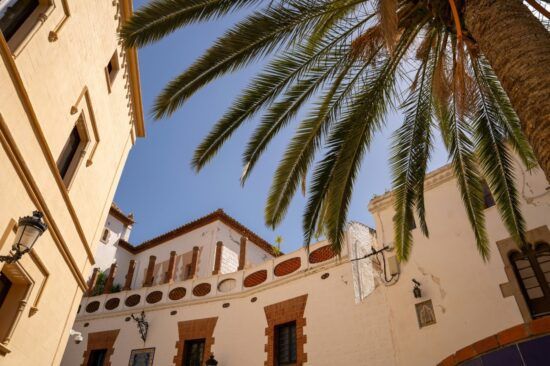
Stone plazas open under broad sky. Cathedrals cast shadows that reach slowly across pavements. Markets hum at a level that never quite becomes loud.
Heritage here does not perform. It persists.
You move through courtyards where fountains murmur without drawing attention. Doorways open into rooms cooled by thick walls. The scale remains human, even when history suggests grandeur.
The Texture of Continuity
Luxury, in this context, does not announce itself through excess. It reveals itself in pacing. In the absence of haste. In the way a guide speaks softly rather than emphatically.
Cabins remain understated — linens light against darker wood, windows framing the river without dramatizing it. The vessel glides rather than pushes.
Onshore, heritage feels integrated rather than curated. A family restaurant serves food without describing it as tradition. A vineyard worker gestures toward rows of vines that seem endless but familiar.
The experience settles gradually. Nothing competes for attention.
Where Water and Stone Align
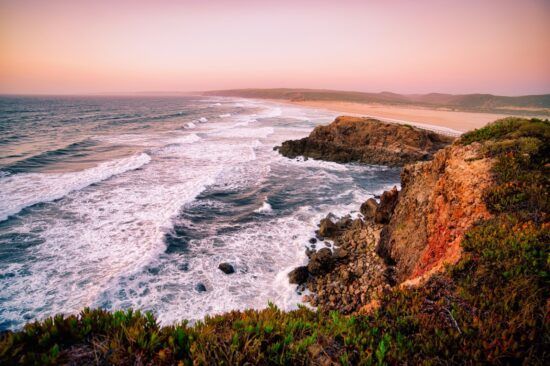
In Portugal, the river narrows between steep hills. In Spain, it widens under open sky. Yet both hold the same steady movement beneath their surface.
You begin to notice small consistencies: the way sunlight rests on tiled roofs, the way footsteps echo differently in arcaded streets, the way conversation slows after wine is poured.
Journeys that might appear exclusive on paper feel quiet in practice. The exclusivity lies less in access and more in space — space to linger, to observe without compression.
The river remains central, though it does not dominate.
After the Mooring Lines Loosen
Later, when the voyage becomes memory, the details merge. Vineyards blur with cathedral shadows. Stone steps leading from a quay resemble those from a plaza visited days later.
What remains is rhythm — the gentle shift of the boat beneath your feet, the way towns approached gradually rather than abruptly, the sense that movement did not demand acceleration.
Iberia does not close itself with spectacle. It widens. The river continues past the point where you disembark. Stone towns remain anchored to hillsides.
And somewhere beyond the final port, the current carries on in the same direction, unhurried, holding both water and history in parallel without insisting that either take the foreground.